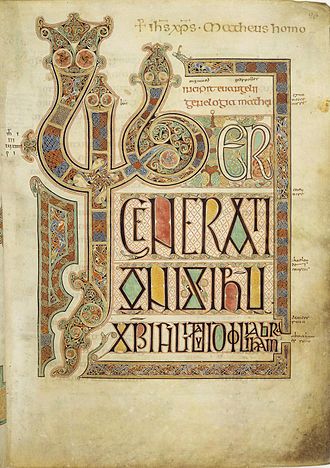
This coming quarter I plan to provide lectio divina prompts for St Luke's Gospel.
How much time?
In his Rule, St Benedict points us to several key means of sanctification, including:
Our reading, then, should be part of a balanced program, reflecting our state in life: Carthusian monks, who have few other demands on their time might be able to do several hours a day of it; but those living in the world with families and a job might only be able to manage a few minutes or so!
Even so, a few minutes can be of great benefit to us, so it is worth trying to carve out the time each day.
The point of lectio divina, it must be remembered, is not just to quickly read through the text as if it was a work of fiction which we want to read quickly in order to find out what happens. Rather, the idea is ponder it so that it can act as a mirror to our souls, and a guide to our living. Accordingly, depending on how much time you can allocate to lectio each day, you might want to read through the text here each day, but then focus in on one or two particular verses.
I'd also strongly encourage you to at least read through and/or listen to the Latin - even if you haven't studied Latin, you will gradually be able to start picking out the words, absorb it, and at the very least be able to recognise it when you hear it at Mass. And reading and hearing the Greek can also be of benefit given that was the language it was written in.
This might also be a good point to take a (another) look at my notes on how to do lectio divina. The key point is that these posts are intended as a starting point for your own study and meditation, not the end point!
St Luke
St Luke's Gospel provides us with some rich material from Our Lady on the events surrounding the nativity of Christ, so I plan to linger on those early chapters a little. In particular, given that we say the Benedictus and Magnificat canticles taken from St Luke daily in the Office, I thought I'd send a couple of days on those, to provide you with some possible starting points for probing deeper into the meaning of these texts to which the Church has attached so much importance.
As usual, I'll take a break for Sunday and the major feasts, and provide the Gospel of the day (from the EF/traditional Benedictine calendar) and third nocturn Matins readings on them instead. I should note though that on July 2, the feast of the Visitation, the Gospel is actually from St Luke 1, so I've arranged it so that the Gospel text appears in sequence.
With that in mind, I anticipate reaching chapter 8 of St Luke's Gospel by the end of July, and chapter 18 by the end of August, finishing St Luke by the end of September.
In terms of commentary, I'll provide extracts mainly from the classic commentary of Cornelius de Lapide this time around, occasionally supplemented by other sources such as the Catena Aurea compiled by St Thomas Aquinas.
Other books of the Bible
For those interested in reading more of the Bible than just the Gospels, I've updated (and will keep updated!) my summary (which you can find in a sidebar) of the Bible in a Year Reading Plan 1 put together by Dom Christopher Lazowski, OSB.
The plan loosely mirrors the order of readings at Matins (noting of course that the Benedictine Office doesn't have variable Scriptural readings during the week over the Northern Hemisphere summer).
How much time?
In his Rule, St Benedict points us to several key means of sanctification, including:
- acceptance of the call to conversion, and perseverance in the 'narrow way of salvation' (especially the Prologue to the Rule);
- cultivation of obedience and humility (especially chapters 5-7 of the Rule);
- practice of the tools of good works (especially chapter 4);
- the liturgy of the Divine Office, the Opus Dei (especially chapters 8-20);
- work (esp chapter 48); and
- spiritual reading (Chapter 48).
Our reading, then, should be part of a balanced program, reflecting our state in life: Carthusian monks, who have few other demands on their time might be able to do several hours a day of it; but those living in the world with families and a job might only be able to manage a few minutes or so!
Even so, a few minutes can be of great benefit to us, so it is worth trying to carve out the time each day.
The point of lectio divina, it must be remembered, is not just to quickly read through the text as if it was a work of fiction which we want to read quickly in order to find out what happens. Rather, the idea is ponder it so that it can act as a mirror to our souls, and a guide to our living. Accordingly, depending on how much time you can allocate to lectio each day, you might want to read through the text here each day, but then focus in on one or two particular verses.
I'd also strongly encourage you to at least read through and/or listen to the Latin - even if you haven't studied Latin, you will gradually be able to start picking out the words, absorb it, and at the very least be able to recognise it when you hear it at Mass. And reading and hearing the Greek can also be of benefit given that was the language it was written in.
This might also be a good point to take a (another) look at my notes on how to do lectio divina. The key point is that these posts are intended as a starting point for your own study and meditation, not the end point!
St Luke
St Luke's Gospel provides us with some rich material from Our Lady on the events surrounding the nativity of Christ, so I plan to linger on those early chapters a little. In particular, given that we say the Benedictus and Magnificat canticles taken from St Luke daily in the Office, I thought I'd send a couple of days on those, to provide you with some possible starting points for probing deeper into the meaning of these texts to which the Church has attached so much importance.
As usual, I'll take a break for Sunday and the major feasts, and provide the Gospel of the day (from the EF/traditional Benedictine calendar) and third nocturn Matins readings on them instead. I should note though that on July 2, the feast of the Visitation, the Gospel is actually from St Luke 1, so I've arranged it so that the Gospel text appears in sequence.
With that in mind, I anticipate reaching chapter 8 of St Luke's Gospel by the end of July, and chapter 18 by the end of August, finishing St Luke by the end of September.
In terms of commentary, I'll provide extracts mainly from the classic commentary of Cornelius de Lapide this time around, occasionally supplemented by other sources such as the Catena Aurea compiled by St Thomas Aquinas.
Other books of the Bible
For those interested in reading more of the Bible than just the Gospels, I've updated (and will keep updated!) my summary (which you can find in a sidebar) of the Bible in a Year Reading Plan 1 put together by Dom Christopher Lazowski, OSB.
The plan loosely mirrors the order of readings at Matins (noting of course that the Benedictine Office doesn't have variable Scriptural readings during the week over the Northern Hemisphere summer).